- MOH License No. 1539/2/5/14/5/15 · Villa 823 - شارع شاطئ جميرة - Umm Suqeim Third - Umm Suqeim 3 - Dubai
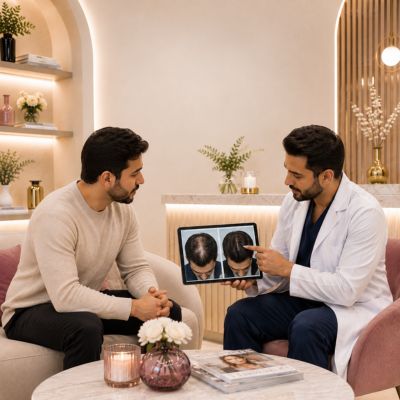
Hair restoration in Dubai & Abu Dhabi is the umbrella term for every treatment approach used to address hair loss, ranging from non-surgical options like PRP and medication to surgical hair transplant techniques like FUE and DHI. At Glam Clinic Dubai, Dr. Hamid Ali Esmaeilpour starts every hair restoration case with a diagnosis of what’s actually causing the loss, since the right restoration path depends entirely on the cause and pattern.
Quick Facts:
- Includes: Surgical and non-surgical treatments
- Non-surgical options: PRP, medication, scalp micropigmentation
- Surgical options: FUE, DHI, robotic transplant
- Suitable for: Men and women, most causes of hair loss
- Lead specialist: Dr. Hamid Ali Esmaeilpour and trichology team
What Is Hair Restoration in Dubai?
Hair restoration refers to any medical or surgical approach used to regrow, preserve, or visually replace lost hair, and it isn’t limited to transplants — it includes regenerative therapies, medication, and non-surgical cosmetic solutions as well. The right hair restoration plan depends on the cause of your hair loss (genetic, autoimmune, stress-related, or hormonal), how advanced it is, and your personal goals and budget.
Non-Surgical Hair Restoration Options:
- PRP hair treatment — uses your own blood-derived growth factors to strengthen existing follicles
- Topical or oral medication — slows further loss in genetic pattern hair loss
- Scalp micropigmentation — creates a visual density illusion without surgery
- Human hair wigs — immediate, non-permanent coverage
Surgical Hair Restoration Options:
- FUE hair transplant — individual follicle extraction, minimal scarring
- DHI hair transplant — direct implantation for precise angle control
- Robotic hair transplant — image-guided extraction for large sessions
- Crown, beard, and other targeted transplants — for specific areas beyond the scalp hairline
How to Know Which Hair Restoration Path Is Right for You:
The right hair restoration approach depends on three questions: what’s causing your hair loss, how advanced it is, and whether you’re seeking a permanent surgical fix or a lower-commitment non-surgical option. Early, diffuse thinning often responds well to non-surgical options like PRP, while established bald patches or a fully receded hairline typically require a surgical transplant for meaningful, permanent coverage.
Lifestyle Factors That Support Hair Restoration Results:
Whichever treatment path you choose, a few everyday habits meaningfully influence how well your results hold up over time. Adequate protein intake supports the keratin production your follicles rely on, chronic stress and poor sleep are commonly linked to accelerated shedding, and excessive heat styling or tight hairstyles can cause additional mechanical damage on top of whatever underlying cause you’re already treating. None of these factors alone will reverse genetic pattern hair loss, but ignoring them can undercut even a well-executed surgical or medical treatment plan.
Setting Realistic Expectations for Hair Restoration Timelines:
Regardless of which hair restoration option you choose, patience is part of the process — no treatment produces overnight results, because hair growth itself is a slow biological cycle. Non-surgical treatments like PRP typically show gradual improvement over 3 to 6 months of consistent sessions, while surgical transplants follow a longer arc: initial shedding of transplanted hair in the first month (normal, not a failure), new growth beginning around month 3 to 4, and final density assessed at the 12-month mark. Knowing this timeline in advance helps avoid the common mistake of judging results too early.
Why Choose Glam Clinic for Hair Restoration?
- Full-spectrum options under one roof, from PRP to robotic transplant
- Diagnosis-first approach led by Dr. Hamid Ali Esmaeilpour and our trichology team
- DHA-licensed facility with transparent, personalized treatment planning
- No one-size-fits-all recommendation — your plan is built around your specific pattern of loss
Frequently Asked Questions:
Can Hair Restoration Treatments Be Combined?
Yes. Many patients combine a surgical transplant with non-surgical maintenance therapy like PRP to protect existing hair and support new graft growth.
How Do I Know Which Hair Restoration Option I Need?
A consultation with a specialist is the only reliable way to know — the right plan depends on diagnosing the cause and pattern of your specific hair loss.
Is Non-Surgical Hair Restoration as Effective as a Transplant?
Non-surgical options like PRP can slow loss and improve density in early thinning, but they don't create permanent new growth in fully bald areas the way a transplant does.
How Long Do Hair Restoration Results Last?
Surgical results are permanent, while non-surgical treatments like PRP or medication typically require ongoing maintenance to sustain results.
Can Hair Restoration Treat Both Men and Women?
Yes, both surgical and non-surgical hair restoration options are available for men and women, though treatment plans differ based on hair loss pattern and cause.
What's the First Step in Hair Restoration?
The first step is always a proper diagnosis of what's causing your hair loss, since the right treatment path depends entirely on the underlying cause.
Does Hair Restoration Work for All Types of Hair Loss?
Most types respond to some form of hair restoration, though options and expected outcomes vary significantly between genetic pattern loss, autoimmune conditions, and stress-related shedding.
How Much Does Hair Restoration Cost?
Cost varies widely depending on which treatments are involved, from a few hundred dirhams for a single PRP session to tens of thousands for a full surgical transplant.
Book Your Free Consultation:
Book a free consultation with Dr. Hamid Ali Esmaeilpour to get a personalized hair restoration plan matched to your specific hair loss pattern.
Related treatments: Hair Transplant Dubai · PRP Hair Treatment · FUE Hair Transplant · Best Trichologists