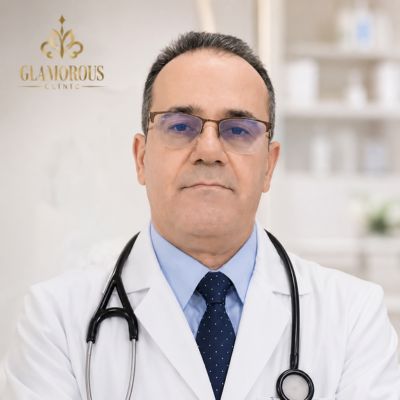
- MOH License No. 1539/2/5/14/5/15 · 351 Al Wasl Rd, Al Bada'a, Jumeirah, Dubai

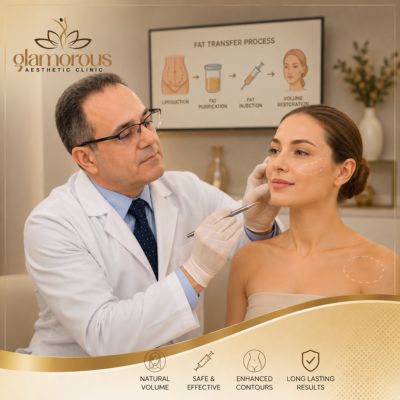
If you’ve ever wondered whether you could lose stubborn fat in one area and use it to add natural volume somewhere else, the answer is yes — that’s exactly what fat transfer does. Fat Transfer (Fat Grafting) in Dubai & Abu Dhabi, part of our Cosmetic Surgery offering, removes fat from an area like the abdomen or thighs and reinjects it into the face, breasts, or buttocks for natural, long-lasting volume, performed by Dr. Hamid Ali Esmaeilpour, who brings over 15 years of surgical experience to every case.
Quick Facts:
- Cost: AED 15,000 – 50,000, depending on the target area
- Areas commonly treated: Face, breasts, buttocks, hands, scars
- Donor areas: Abdomen, flanks, thighs
- Anesthesia: Local (small areas) or general (larger volume transfers)
- Downtime: 1–2 weeks
- Final results: 3–6 months
- Fat survival rate: 60–80%, depending on technique and aftercare
- Lead surgeon: Dr. Hamid Ali Esmaeilpour, 15+ years’ experience
What Is Fat Transfer?
Fat transfer, also known as fat grafting or autologous fat transplantation, is a two-part cosmetic procedure that combines liposuction with volume restoration. Fat is first removed from a donor area where you have excess (commonly the abdomen, flanks, or thighs), purified to isolate healthy fat cells, and then carefully reinjected into a target area that needs more volume — the cheeks, breasts, buttocks, or even the hands. Because the material used is your own body fat rather than a synthetic filler or implant, the results tend to look and feel exceptionally natural, and there’s no risk of an allergic reaction to foreign material.
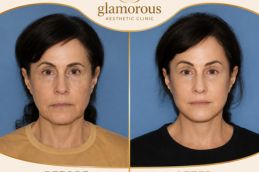
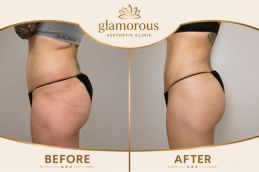

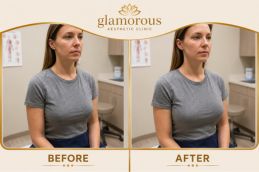
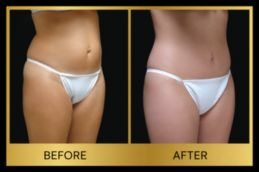

Results of Fat Transfer:
- A natural, soft-tissue feel and appearance, since the volume added is your own living fat rather than an implant or synthetic filler.
- Immediate initial volume is visible right after the procedure, though a portion of this is temporary swelling rather than permanent fat.
- Approximately 60 to 80 percent of transferred fat cells survive long-term, depending on surgical technique, the area treated, and how well aftercare guidelines are followed.
- Surviving fat cells behave like the surrounding tissue, meaning results can last for years and, in many cases, are considered permanent.
- Final, settled results are visible at 3 to 6 months, once temporary swelling has fully resolved and the surviving fat has stabilized in its new location.
What Can Fat Transfer Treat?
| Target Area | What It Achieves |
| Face (cheeks, under-eyes, lips) | Restores lost volume for a fuller, more youthful appearance |
| Buttocks (Brazilian Butt Lift) | Adds natural curve and shape without implants |
| Breasts | Modest, natural volume increase for patients who prefer to avoid implants |
| Hands | Restores volume lost with age, reducing a veiny or aged appearance |
| Scars and depressions | Smooths out indentations from acne scarring or past injuries |
Am I a Good Candidate?
Good candidates typically have:
- Enough donor fat available in the abdomen, flanks, or thighs to harvest
- Realistic expectations about the degree of volume change (this technique creates subtle, natural results rather than dramatic size increases)
- A stable weight, since significant weight loss after the procedure can affect the transferred fat
- Overall good health with no conditions that would elevate surgical risk
Fat transfer may not be right if you:
- Are very lean with minimal donor fat available to harvest
- Are hoping for a dramatic volume increase in a single session, such as a large breast size jump — implants may better suit that specific goal
- Are still in an active weight-loss phase
The Procedure, Step by Step:
- Consultation – your health history is reviewed, donor and target areas are identified, and before-photos are taken to track your results.
- Anesthesia – local anesthesia is used for smaller facial procedures; general anesthesia or deeper sedation is typically used for larger-volume transfers like a Brazilian Butt Lift.
- Fat harvesting – small incisions (roughly 3mm) are made in the donor area, and a thin cannula is used to gently remove fat, similar to liposuction.
- Fat purification – the harvested fat is processed to separate healthy fat cells from blood and other fluids, keeping only viable tissue for reinjection.
- Reinjection – the purified fat is carefully injected into the target area in small amounts and multiple layers, which is what creates a natural, non-lumpy result and requires real surgical skill.
Recovery Timeline:
| Period | What to Expect |
| Days 1–7 | Bruising and swelling in both donor and injected areas; compression garments worn on donor sites |
| Weeks 2–3 | Swelling gradually reduces; light activity resumes |
| Month 1 | Initial shape becomes more apparent as swelling settles |
| Months 3–6 | Final, settled results visible as remaining swelling fully resolves and surviving fat stabilizes |
Aftercare Guidelines:
- Wear compression garments over donor areas to support skin retraction
- Avoid sitting directly on treated buttocks for 2–3 weeks if you’ve had a Brazilian Butt Lift
- Begin light walking the day after your procedure to support circulation
- Avoid strenuous exercise until cleared by your surgeon
- Maintain a stable, healthy weight to protect your results long-term
Fat Transfer vs Fillers vs Implants: What’s the Difference?
| Factor | Fat Transfer | Fillers | Implants |
| Material | Your own body fat | Synthetic (hyaluronic acid, etc.) | Synthetic (silicone, saline) |
| Allergic reaction risk | Very low | Possible | Possible |
| Longevity | Long-term to permanent | 6–18 months | Permanent |
| Look and feel | Natural, soft tissue | Natural but temporary | Can feel firmer or less natural |
| Volume achievable | Moderate | Moderate, requires upkeep | More dramatic increase possible |
| Recovery | 1–2 weeks | Minimal | 1–4 weeks depending on area |
Patients wanting a dramatic size increase (particularly for breasts) may still prefer implants, while those wanting subtle, natural volume with no synthetic material typically choose fat transfer. For smaller, temporary touch-ups, dermal fillers remain a lower-commitment option worth discussing during your consultation.
Cost of Fat Transfer in Dubai:
Fat transfer cost in Dubai depends heavily on the target area and the volume of fat required. Your exact price is confirmed after an in-person consultation with Dr. Hamid Ali Esmaeilpour.
| Target Area | Estimated Price (AED) |
| Face (cheeks, under-eyes, lips) | 15,000 – 25,000 |
| Hands | 8,000 – 12,000 |
| Breast Augmentation (fat transfer) | 25,000 – 40,000 |
| Brazilian Butt Lift | 30,000 – 50,000 |
| Combined with additional liposuction areas | +8,000 – 15,000 |
What affects your final price?
- Target area and volume of fat required
- Number of donor sites needed to harvest sufficient fat
- Anesthesia type (local vs. general)
- Surgeon’s technique and experience, which directly affects fat survival rate
Choosing the Right Clinic for Fat Transfer in Dubai:
- Confirm the clinic and surgeon hold a valid DHA license
- Ask to see genuine before-and-after cases, not just heavily curated marketing images
- Ask specifically about fat survival rate — an experienced surgeon should be able to discuss this transparently, since technique significantly affects how much transferred fat remains long-term
Frequently Asked Questions:
Is Fat Transfer Permanent?
A portion of transferred fat is reabsorbed by the body in the months following the procedure, but the fat that survives (typically 60–80%) behaves like normal tissue and is considered long-term to permanent.
Is Fat Transfer Painful?
Most patients describe mild to moderate discomfort in both the donor and injection sites, well-controlled with prescribed oral pain medication during the first week.
How Much Fat Is Needed For Different Areas?
Facial fat transfer typically requires 20–50ml, breast augmentation needs roughly 200–400ml per side, and a Brazilian Butt Lift can require 800–1,200ml or more, depending on your goals.
Will I Lose The Added Volume If I Lose Weight?
Since transferred fat cells behave like your body's other fat cells, significant weight loss after the procedure can reduce the treated area's volume — maintaining a stable weight is the best way to protect your results.
Can Fat Be Transferred To Multiple Areas In One Session?
Yes, provided enough donor fat is available — many patients combine facial fat transfer with body contouring, or address more than one target area in the same procedure.
Is More Than One Session Ever Required?
Sometimes. Areas with higher fat resorption rates, such as the face, may benefit from a smaller touch-up session to achieve the fullest possible result.
Can Fat Transfer Be Combined With Liposuction?
Yes — in fact, fat transfer inherently begins with a liposuction step to harvest the donor fat, and many patients choose to have additional areas contoured in the same session.
What's The Difference Between Fat Transfer And A BBL?
A Brazilian Butt Lift (BBL) is simply fat transfer performed specifically on the buttocks — the same harvesting and purification process is used, just with a different target area and typically a larger fat volume.
Am I Too Lean For Fat Transfer?
If you have very little donor fat available in common harvest areas like the abdomen or thighs, fat transfer may not be suitable, since the procedure depends on having enough fat to both harvest safely and achieve meaningful results in the target area — this will be assessed during your consultation.
Book Your Free Consultation::
Ready for natural volume using your own body’s fat? Book a free consultation with Dr. Hamid Ali Esmaeilpour at Glam Clinic Dubai to find out which areas are right for your goals.
Book Your Free Consultation Now →
Related treatments: Liposuction Surgery · Breast Augmentation · Dermal Fillers · Tummy Tuck · Cosmetic Surgery